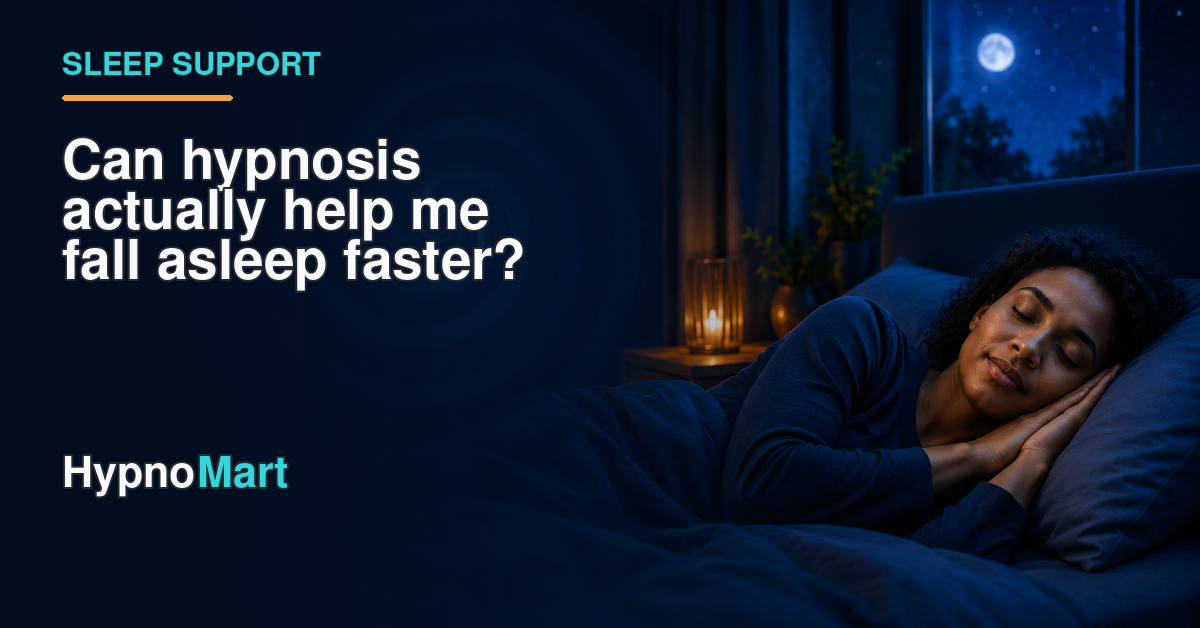
Learn how hypnosis may support relaxation, focus, and a steadier bedtime routine when you want to fall asleep more comfortably.
Featured Product for This Question
- by Hypnosis DownloadsSleep Problems
Fall Asleep Easily and Unlock Lasting Restful Nights – Struggling with a racing mind, nighttime restlessness, or the exhausting cycle of tossing and turning can make drifting off to sleep feel like an uphill battle. This specialized hypnosis audio session is designed to help you calm your nervous system and re-educate your subconscious mind so your natural drowsiness and deep inner calm can take root. By blending restorative relaxation with targeted mental conditioning, this session empowers you to release stress-related tension, anchor deep physiological sleep-readiness, and navigate your bedtime routine with absolute poise and peace of mind.
Current partner price: $14.95 USD
Short Answer
Hypnosis may help some people fall asleep faster by guiding attention away from everyday mental noise and toward calming breathing, imagery, and suggestions. It is not a guaranteed sleep treatment, and persistent or concerning sleep problems deserve qualified medical advice.
How Hypnosis May Make the Transition to Sleep Easier
Falling asleep is usually a gradual change, not an on-off switch. Your body becomes less active, attention turns away from the day, and thoughts begin to lose their urgency. When that transition feels difficult, trying to force sleep can add frustration and alertness—the opposite of the state you want.
Hypnosis may support this transition by giving your mind a simple, structured focus. A calming voice may invite slower breathing, softer muscles, peaceful imagery, and suggestions connected with rest. Some people find that this makes it easier to stop monitoring whether sleep is happening and let drowsiness develop naturally.
What Sleep Hypnosis Is—and Is Not
Hypnosis is a cooperative state of focused attention. You are not unconscious, powerless, or under another person’s control. You can notice the room, reject a suggestion, change position, or stop listening. For bedtime use, the goal is often modest: reduce effort, settle attention, and make the wind-down period feel more familiar.
That does not mean hypnosis guarantees faster sleep. People respond differently, and the same person may have an easier night one day and a harder night another. Stress, pain, medication, caffeine, breathing problems, environment, schedules, and many other factors can affect sleep.
Four Ways Hypnosis May Support Bedtime
1. It can create a repeatable transition
A regular recording or self-hypnosis practice can become one cue that the active part of the day is ending. Used at roughly the same point in a calm routine, it may help separate planning, work, and scrolling from the quieter behavior associated with bed.
2. It can encourage physical relaxation
Many sessions guide attention through breathing, heaviness, warmth, or progressive muscle release. These instructions do not force sleep, but they may help you notice and soften tension in the jaw, shoulders, hands, or abdomen. A more comfortable body can make settling down feel less like a task.
3. It can give a busy mind one quiet focus
At bedtime, attention may jump among unfinished tasks, conversations, plans, and worries. Hypnosis offers a gentler path to follow, such as counting, imagery, or the rhythm of a voice. Thoughts can still appear. The useful skill is often returning without arguing with them.
4. It may support confidence in a routine
After several difficult nights, bedtime itself can start to feel like a test. Realistic suggestions—such as allowing rest, releasing the need to check the time, and trusting the body’s gradual process—may help reduce some of that performance pressure. The aim is not to promise a perfect night; it is to practice a calmer response.
What to Expect the First Few Times
You may feel deeply relaxed, mildly relaxed, distracted, or simply comfortable. None of those experiences proves that you did hypnosis correctly or incorrectly. You do not need to make your mind blank. If attention wanders, notice it and return to the voice, breath, or image without grading the session.
Some people notice a useful difference immediately; others need several attempts to decide whether the approach fits. It can help to judge the whole wind-down experience rather than timing sleep to the minute. A quieter body, less clock-checking, or an easier return to the exercise may be meaningful early signs even when sleep is not instant.
How to Use Sleep Hypnosis More Comfortably
- Choose a time when you are finished driving, cooking, or doing anything that requires alert attention.
- Make the room comfortable and reduce avoidable light, noise, and notifications.
- Set the volume low enough to feel soothing and use a sleep timer if that prevents later disruption.
- Use headphones only if they remain physically comfortable and safe while you settle down; a quiet speaker is also reasonable.
- Let the exercise be part of a consistent routine rather than a test you must pass.
- If a style of voice, imagery, or suggestion feels irritating, choose a different approach instead of forcing it.
What Hypnosis Cannot Promise
Hypnosis cannot guarantee that you will fall asleep within a specific number of minutes, stay asleep all night, or wake fully refreshed. It should not be presented as a cure for insomnia or as a replacement for medical or mental-health care. Its most realistic role is as one optional relaxation and attention tool within a broader sleep-support routine.
When Sleep Problems Deserve Qualified Care
Consider speaking with a qualified healthcare professional when sleep difficulty is persistent, worsening, or significantly affecting daytime function. Loud snoring with gasping or breathing pauses, severe daytime sleepiness, unusual movements or behaviors during sleep, ongoing pain, or major mood changes also deserve professional attention. A clinician can help identify causes that a relaxation recording cannot assess.
A Realistic Goal for Tonight
Instead of demanding immediate sleep, try aiming for a calmer transition. Get comfortable, follow one gentle point of focus, and allow thoughts to pass without solving them. Hypnosis may help some people make that transition more smoothly, but rest is not a performance and one night is not a verdict.
Key Takeaways
- Hypnosis may support sleep by guiding attention toward calming breathing, imagery, and realistic suggestions.
- The goal is a gentler transition to rest, not forcing the mind blank or guaranteeing immediate sleep.
- A consistent wind-down routine can make hypnosis a familiar bedtime cue.
- Comfort, safe audio use, and realistic expectations matter more than having a dramatic hypnotic experience.
- Persistent, worsening, or concerning sleep problems deserve evaluation by a qualified healthcare professional.
Frequently Asked Questions
Does sleep hypnosis make me lose control?
No. Hypnosis is cooperative focused attention. You can notice your surroundings, reject a suggestion, change position, or stop listening.
What if I fall asleep before the hypnosis recording ends?
That is not usually a problem when sleep is the purpose. Use a comfortable volume and timer so the audio or device does not disturb you later.
How often should I try sleep hypnosis?
Some people find a consistent routine helpful, but there is no guaranteed schedule. Try it often enough to judge the overall wind-down experience without turning bedtime into a performance test.
Do I need headphones for sleep hypnosis?
No. Headphones are optional. Choose a quiet speaker or a physically comfortable, safe setup that will not interfere with settling down.
Is sleep hypnosis a medical treatment for insomnia?
No. It is an optional relaxation and attention practice, not a diagnosis or guaranteed treatment. Persistent or concerning sleep problems should be discussed with a qualified healthcare professional.
How to Use Hypnosis Recordings
- Read the Fall Asleep Fast details for more information before buying.
- Listen only when you can safely relax and do not need to drive, operate machinery, or stay fully alert.
- Use a quiet setting, reduce interruptions, and give the session your full attention.
- Repeat the session daily for at least 21 days and give yourself time to notice gradual changes.
More Problem Areas in Sleep Problems
This product group: Insomnia & Sleep
Important Notes
Affiliate Disclaimer: HypnoMart may earn a commission if you purchase through links on this page. This comes at no additional cost to you.
Important Safety Notes: Do not listen to hypnosis recordings while driving, operating machinery, or doing anything that requires your full attention or full conscious awareness.
No Medical Advice: HypnoMart does not diagnose, treat, or provide medical, mental health, legal, financial, or professional advice.